

Our Blog

Timing Matters!

February 23rd, 2016

Many patients at Northwest Smile Design are under the impression that harder brushing leads to cleaner teeth, but that is not true. Gentle brushing is just as effective, and less likely to cause damage. Other good brushing habits include brushing your teeth at least twice a day, replacing your toothbrush after a few months, and brushing for at least two minutes each time. It can be tough to keep track of the time when you are aiming for two minutes, but these tips can help.

Set a Timer

Setting a timer is a sure-fire way to hit your two-minute goal on the dot. Leave a kitchen timer in your bathroom so that it is easy to set each time you start brushing your teeth. Hit each surface of all of your top and bottom teeth, and keep brushing until the timer rings. Many electric toothbrushes have a built-in timer that you can use instead of a kitchen timer.

Entertain Yourself for Two Minutes

Time flies when you are having fun, and you can stay entertained as you brush your teeth for two minutes. These are some ideas.

  • Time your favorite song and sing it in your head as you brush your teeth.
  • Find a two-minute video on the Internet that you want to watch, and start it when you begin to brush your teeth.
  • Do squats in the bathroom as you brush. Go down for three slow counts, and up for three slow counts. By the time you get to 20 squats, your two minutes will be over.

Let Your Children Use Technology

Toothsavers is an app designed to inspire children to brush. The app was developed and released by the Ad Council and the Partnership for Healthy Mouths, Healthy Lives. It includes:

  • A game to fight an evil sorceress who causes cavities
  • A two-player version that lets children interact with friends and parents
  • Real-life reminders to brush twice a day
  • A built-in timer that helps kids brush for two minutes

How long do dental implants last?

February 16th, 2016

The average dental implant can last a lifetime if taken care of properly. In fact, studies have shown that the success rate of implants after ten years is about 90%! Of course, Dr. Kelly Peterson and our team know that the better you care for your implant, the longer it will last.

There are a few factors that must be taken into consideration, when you are considering dental implants. These factors all play a role in how long your dental implants will last.

  • Bone Structure – You must have enough bone in your mouth for the implants to be inserted. Over time, the bone can wear down and become too thin or to short. In cases, where you may have just enough bone for the implants, over the years, the bone will continue to become smaller and thinner and the implants will not last nearly as long as the suggested minimum of ten years.
  • Healthy Gums – Diseased gums will not support dental implants for very long. It is important to maintain regular dental visits to maintain your healthy gums.
  • Good Oral Hygiene – Just because your implants are not your “real” teeth, doesn’t mean you have to take care of them. That means brushing, flossing, and regular professional cleanings.

Bone structure, healthy gums, and good oral hygiene all play a crucial role in the length of time your dental implants will last. Whether you have full dental implants, partial implants, or a single tooth implant. The bottom line is you have to take care of them if you want them to last as long as possible.

For more tips on how to maintain the health of your dental implant, visit our Marysville, WA office!

Valentine's Day History

February 9th, 2016

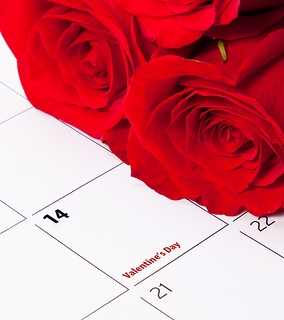
Valentine’s Day is best known as a celebration of love in all its forms. Pink hearts, red roses, and cute greeting cards adorn every surface you see. What many people don’t realize is that the modern Valentine’s Day celebration arose from a religious holiday.

St. Valentine’s Day was originally celebrated as a religious feast day in honor of early Christian martyrs. Three martyrs named Valentine were honored: a priest in Rome, the persecuted bishop of Interamna (a town in central Italy), and a saint martyred in Africa. This saint’s day was celebrated throughout Christendom, although it was removed from the Roman Catholic Calendar of Saints in 1969.

The origin of Valentine’s Day as a holiday for lovers began with Geoffrey Chaucer in his 1382 poem “Parlement of Foules.” Chaucer wrote, “For this was on Saint Valentine’s Day, when every bird cometh there to choose his mate,” and the modern romantic holiday was born. William Shakespeare and other writers mentioned Valentine’s Day as a day of love.

Valentine’s Day as we know it came about in the early 19th century. In Victorian England, printers began manufacturing small numbers of cards with romantic verses, lace, ribbons, and other frills. Anonymous Valentine’s Day card were a popular way for young lovers to exchange romantic sentiments in an otherwise prudish time. As the 19th century progressed, printers began mass manufacturing Valentine’s Day cards. People in the United States give an estimated 190 million valentines every year, and up to one billion if you count children exchanging cards at school! With the rise of the Internet, Valentine’s Day e-cards have become a popular mode of communication, with millions of e-cards sent each year.

The other items associated with Valentine’s Day include chocolate and flowers. The tradition of giving chocolates has been around for decades, and Richard Cadbury created the first box of Valentine’s Day chocolates nearly 150 years ago. Today, purchases of chocolate total over $1 billion in the United States alone, with 35 million heart-shaped boxes sold each year. Loved ones also exchange flowers, with red roses being associated with Aphrodite, the Greek goddess of love. On Valentine’s Day itself, florists sell nearly 200 million stems of roses.

Although many people dismiss Valentine’s Day as a commercialized “Hallmark holiday,” it is beloved to couples and romantics across the United States and other countries. The team at Northwest Smile Design wants to remind all patients that no matter what your celebratory plans, February 14th can be a wonderful day to celebrate the loved ones in your life. Happy Valentine’s Day!

Does getting a dental implant hurt?

February 2nd, 2016

Getting a dental implant is a surgical procedure and everyone’s pain tolerance level is different. Therefore, what one person may perceive as pain is only a slight discomfort for another person. The general consensus about pain and dental implants is that the majority of people feel discomfort, not pain.

A dental implant is a complex procedure. Let’s take a look at what may cause discomfort:

  • Some people may find that having the IV put in is uncomfortable, especially if the healthcare worker has to try more than once. If you have a fear of needles or if you have anxiety about the procedure, we can prescribe a sedative, which you take before you arrive.
  • Of course, during the dental implant surgery, you will be asleep. Therefore, you will not feel any pain or discomfort at all.
  • When you awake from the surgery, your mouth should still be numb. In many cases, we can give you a “block” – it is basically a 24-hour pain medication, so you will not feel any pain or discomfort at all.
  • We will also provide you with a prescription for a strong pain killer, and you will most likely sleep while you are taking them. If you are still in pain, do not take more than is prescribed without calling us first. You will need someone to stay with you for 24 hours after the surgery, and they will be instructed on how to give you any prescription medication. The anesthesia tends to make people a bit loopy and forgetful the first 24 hours.
  • After the first 24 hours you may feel some discomfort. The most important thing you can do is take your pain medication regularly, whether you are taking the prescription medication or an over-the-counter pain reliever such as Tylenol or Advil.
  • You should not need pain medication for more than the first few days.

Most people do say there mouth is sore and they have to be careful what they eat, so it’s best to stick to soft foods. If you have any additional questions, please contact our Marysville, WA office and speak with Dr. Kelly Peterson.

(360) 658-7750 5100 Grove St, Ste B
Marysville, WA 98270

Office Hours

Mon 8:00am-5:00pm
Tues 8:00am-5:00pm
Wed 8:00am-5:00pm
Thurs 8:00am-5:00pm
Fri Closed
American Dental Association American Academy Of Cosmetic Dentistry Washington State Dental Association
Back to Top