

Our Blog

How a High-Tech Office Helps Your Dental Treatment

December 12th, 2017

A dental office on the cutting edge of technology offers numerous benefits to its patients. Whether you are in need of a simple cleaning or extensive restorative work, these technologies will help you stay more comfortable and give you better results than the outdated tools used in many offices. Here are some of the technologies that you can expect to see in our modern dental office:

  • Digital radiography – Digital X-rays and imaging expose patients to far less radiation than traditional X-rays. Not only that, but these digital images provide a more detailed and easier-to-view snapshot of what is going on in and around your teeth. They make it easier for patients to see what's going on since we can show them right on the computer monitor. It's also better for the environment because there’s no need for the toxic chemicals used to develop traditional X-ray films.
  • Panoramic X-rays – This digital X-ray gives Dr. Kelly Peterson a more in-depth understanding of the entire structure of your mouth and head than a regular X-ray. The panoramic X-ray machine rotates around your head and takes a 3D image of it, giving us a very complete picture that allows for more effective and timely treatment planning.
  • Bioceramic implants, prosthetic devices, and sealants – Advances in implants and prosthetic devices over the past several decades has led to the creation of bioceramic (nontoxic) materials ideal for crowns, veneers, and implants. These materials allow for more visually appealing dental work since there are no metals used with these high-tech ceramics.
  • Paperless bills and records – We all know the inconvenience of paper bills and receipts; they can create clutter and get lost. Our office has done away with this trouble by going paperless. This means you'll receive all your pertinent paperwork in your email inbox and records will be kept digitally at the office. No more wall full of patient records!

This is just an overview of the many advances that we’ve made to our Marysville, WA office to make it cleaner, quieter, more comfortable, and more efficient, helping you spend less time in the chair and more time smiling!

Solutions for Dry Mouth (Xerostomia)

December 5th, 2017

Dry mouth, or xerostomia, is a common side effect of many medications. It can also be a side effect of cancer treatments, or the result of certain auto-immune diseases. Dr. Kelly Peterson and our team at Northwest Smile Design will tell you that for most people, discontinuing their medication isn’t an option. The solution is two-fold: find ways to increase saliva production and eliminate specific things that are likely to increase dryness in the mouth.

Lack of saliva creates a situation in the mouth that allows harmful organisms such as yeast and bacteria to thrive. It may also make it difficult to swallow food, create a burning feeling in your mouth, or cause bad breath, among other problems.

Medications that are known to cause dry mouth include:

  • Anti-depressant drugs
  • Anti-anxiety medications
  • Drugs for lowering blood pressure
  • Allergy and cold medications — antihistamines and decongestants
  • Chemotherapy drugs
  • Medications to alleviate pain
  • Drugs used in the treatment of Parkinson’s disease

Saliva helps people digest their food. It also functions as a natural mouth cleanser. Xerostomia increases the risk you will develop gum disease or suffer from tooth decay.

Solutions for dry mouth

  • Carry water wherever you go, and make a point of taking regular sips.
  • Avoid oral rinses that contain alcohol or peroxide.
  • Chew sugarless gum or suck on sugarless hard candies that contain xylitol.
  • Limit your consumption of caffeine, carbonated beverages (including seltzer and sparkling waters), and alcoholic beverages.
  • Brush your teeth at least twice a day, and use dental floss or other inter-dental products to remove food particles that get stuck between your teeth.
  • Look for oral rinses and other oral hygiene products that bear the American Dental Association (ADA) Seal of Approval.
  • Brush your teeth and use oral rinses that contain xylitol. Certain gels and oral sprays are equally helpful. Biotene is one over-the-counter brand that makes products designed to treat dry mouth.
  • Make sure you get your teeth checked and cleaned twice a year. Dr. Kelly Peterson will be able to examine your mouth for problems and treat them before they turn into something more serious.

You may not be able to solve your dry mouth problem altogether, but you’ll be able to deal with it by following these recommendations. You’ll be able to increase saliva production while reducing your risk of more serious dental problems. To learn more about preventing dry mouth, or to schedule an appointment with Dr. Kelly Peterson, please give us a call at our convenient Marysville, WA office!

I don't brush while I'm at work. Should I?

November 28th, 2017

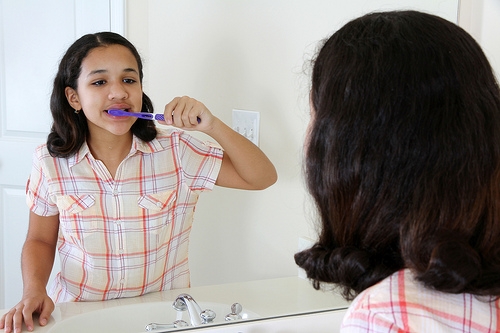
Yes, absolutely. A recent survey by Oral-B® reveals that despite knowing that a healthy, good-looking smile affects not only their personal wellness but their professional image as well, very few people (only 14 percent) brush and floss at the office regularly. What’s more, three quarters of people who responded to the survey said they ate twice or more a day at work.

Today, Dr. Kelly Peterson and our team thought we would provide some tips for brushing at work.

  • Leave a toothbrush at work to increase your likelihood of brushing
  • Brush your teeth twice a day with fluoride toothpaste. Replace your toothbrush every three or four months, or sooner if the bristles are frayed. A worn toothbrush won’t do a good job of cleaning your teeth.
  • Clean between teeth daily with floss or an interdental cleaner; this helps remove plaque and food particles from between the teeth and under the gum line. Tooth decay-causing bacteria still linger between teeth where your toothbrush bristles can’t reach.

And remember to brush for 30 to 45 seconds across visible parts of the teeth. Brushing after breakfast or lunch will eliminate any remaining food particles and odors. We recommend people brush their teeth twice and floss once a day to remove plaque and other harmful bacteria.

To schedule your next appointment with Dr. Kelly Peterson at our Marysville, WA office, please give us a call!

Tooth Worms? The History of Cavities and Tooth Fillings

November 21st, 2017

Scientists have discovered tooth decay in specimens that are more than 15,000 years old. The ancients once thought that cavities were caused by something called “tooth worms” … Eew! They didn’t exist, of course, but how else could humans explain the holes that cavities make in teeth?

The appearance of cavities on a widespread basis is often traced to the rise of farming. The new diet filled with grains and carbs made our mouths a haven for cavity-causing bacteria. As we added more sugar to our diets, our teeth got worse.

The “tooth worm” idea didn’t completely disappear until the 1700s when scientists finally began to understand the process of dental caries. Once that part of the puzzle was solved, they began focusing on filling existing cavities and preventing new ones.

Dental Fillings Come of Age

Many different materials, including beeswax, cork, aluminum, tin, and even asbestos, have been used to fill the holes caused by dental decay. Sometime in the mid-1800s, however, dentists began to use metal fillings such as gold, platinum, silver and lead amalgams.

The amalgam we use today is mixed from liquid mercury, silver, tin, copper, zinc, and other metals, but some patients still like the look of a gold filling. Newer options include composite-resin fillings, which are made from a tooth-colored mixture of plastic resin and finely ground glass-like or quartz particles that form a durable and discreet filling. Porcelain or ceramic fillings are natural in color, but more resistant to staining.

Dr. Kelly Peterson can help decide which filling is best for you, based on cost as well as your dental and lifestyle needs. You may not have “tooth worms,” but if you have cavities, contact our Marysville, WA office so we can take the proper action to protect the health of your mouth.

(360) 658-7750 5100 Grove St, Ste B
Marysville, WA 98270

Office Hours

Mon 8:00am-5:00pm
Tues 8:00am-5:00pm
Wed 8:00am-5:00pm
Thurs 8:00am-5:00pm
Fri Closed
American Dental Association American Academy Of Cosmetic Dentistry Washington State Dental Association
Back to Top